By Alexis Wolze-LeFevre
The Enoch Observer — December 20, 2025
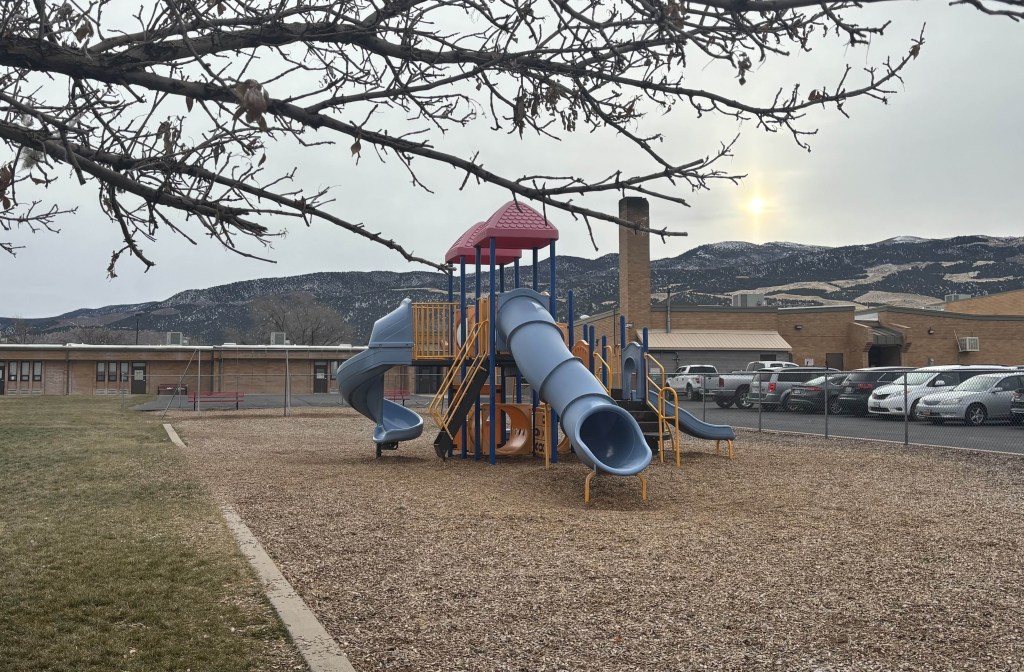
Across Iron County, families are raising concerns about the loss of recess as a disciplinary measure — and, increasingly, about not being informed when it happens.
Utah’s recess best-practice guidance emphasizes that recess is a necessary part of the school day, not a reward to be earned or removed. Physical movement and unstructured play support attention, emotional regulation, and classroom behavior — particularly for younger students and those with higher support needs. For this reason, the guidance discourages withholding recess as a disciplinary consequence.
At Enoch Elementary School, the principal has acknowledged awareness of Utah’s recess best-practice guidance. Despite that, recess continues to be used as a disciplinary consequence at the school, raising questions about how the guidance is being applied in practice.
That gap between guidance and implementation does not exist in isolation.
Concerns about student behavior are not limited to one school or district. National surveys show that teachers and administrators across the country report increased behavioral and emotional challenges among students compared to pre-pandemic years. Rising mental-health needs, staffing shortages, and educator burnout have compounded pressures inside classrooms.
Those same challenges are reflected locally. Families and educators in Iron County describe classrooms grappling with increased behavioral needs while operating with limited staffing and support resources. In this context, disciplinary practices — including the removal of recess — have come under increased scrutiny.
These concerns intersect directly with the broader conversation unfolding in Iron County about teacher burnout, staffing shortages, and long-term sustainability in education.
As previously reported by The Enoch Observer, discussion of a four-day school week in Iron County initially emerged in response to financial pressure. As district leaders explored the proposal further, board members emphasized that staff burnout and workforce sustainability — including survey results showing approximately 71% of teachers in support of exploring a four-day week — became central to the conversation.
In public meetings, board members clarified that the proposal is no longer being examined solely as a cost-saving measure, but as a response to growing strain on educators and staffing across the district.
Those same pressures surface in daily school operations, including discipline practices and classroom management decisions. When systems are under strain, the effects often appear in small but meaningful ways: shortened recess, group consequences, reduced buffers for regulation, and fewer opportunities for individualized support.
Recess loss is not the cause of that strain.
It is a signal of it.
A central concern raised by families is not only that recess is being withheld — but that parents are not being informed when it happens.
Many school handbooks indicate parents will be notified when serious disciplinary actions occur. Yet families report learning about recess loss only through their children, if at all. If a consequence is significant enough to remove recess, it is reasonable to ask whether it should also warrant parent notification.
Recess loss does not end when the school day does. Children often carry the experience home emotionally. Without communication, parents are left unable to reinforce expectations, discuss behavior, or support their child’s understanding of what occurred.
The issue becomes more complex when group consequences are applied. In some classrooms, entire classes lose recess due to the behavior of a few students. Children who followed expectations experience the same loss, while parents may never be informed why it occurred or how it will be addressed.
This is not a failure of parenting.
It is a breakdown in communication.
School behavior does not begin or end at the classroom door.
While schools are responsible for creating safe, structured learning environments, families play a critical role in helping children develop regulation, accountability, and coping skills. When behavioral challenges increase across classrooms, it is worth asking not only what schools are doing — but how families are supporting children outside of school as well.
That starts with conversation.
When parents become aware of disciplinary actions, even informally through their children, those moments create an opportunity to ask questions: What happened today? How did it make you feel? What could we try differently next time?
These conversations are not about punishment. They are about helping children reflect, regulate, and understand expectations across environments.
At the same time, many families are navigating real constraints — work schedules, financial stress, limited time, and exhaustion. Just as schools are under strain, families are too. Supporting children’s behavior requires shared effort, not finger-pointing.
When schools communicate clearly and parents engage openly, children benefit from consistency. When either side is left out of the loop, accountability becomes fragmented — and children are left to make sense of consequences on their own.
Recess loss, behavioral challenges, teacher burnout, and the four-day school-week debate are interconnected symptoms of a system under sustained pressure.
Recess may seem like a small part of the school day, but for many children it is essential to regulation, learning, and emotional well-being. When recess is taken away — especially without parent notification — families lose the ability to support their children and reinforce expectations at home.
Student behavior does not improve in silence. It improves through clear communication, shared responsibility, and consistent support across school and home.
If recess is significant enough to be removed, it should also be significant enough to be communicated — because accountability only works when families are informed and engaged.
Editor’s Note:
The author is a parent of a student in the local school system. This article builds on previous reporting about the proposed four-day school week in Iron County and examines systemic pressures affecting school practices and parent-school communication.
Sources:
Utah State Board of Education. Best Practices for Recess.
https://schools.utah.gov/curr/health/_health/bestpracticesforrecess/BestPracticesRecess1.pdf
Education Week. Is Student Behavior Getting Any Better? What a New Survey Says.
https://www.edweek.org/leadership/is-student-behavior-getting-any-better-what-a-new-survey-says/2025/01
Iron County School District. Four-Day School Week Survey Presentation.
https://www.youtube.com/watch?v=G4mSJV5c_RY
The Enoch Observer. What a Four-Day School Week Could Mean for Iron County Families.
https://theenochobserver.com/2025/12/06/what-a-4-day-school-week-could-mean-for-iron-county-families/
Centers for Disease Control and Prevention. Recess and Physical Activity.
https://www.cdc.gov/physical-activity-education/recess/?CDC_AAref_Val=https://www.cdc.gov/healthyschools/physicalactivity/recess.htm
 The Enoch Observer
Leave a comment