A Family-Science–Informed Report on the District Proposal and Community Response
By Alexis Wolze-LeFevre
The Enoch Observer — December 6, 2025
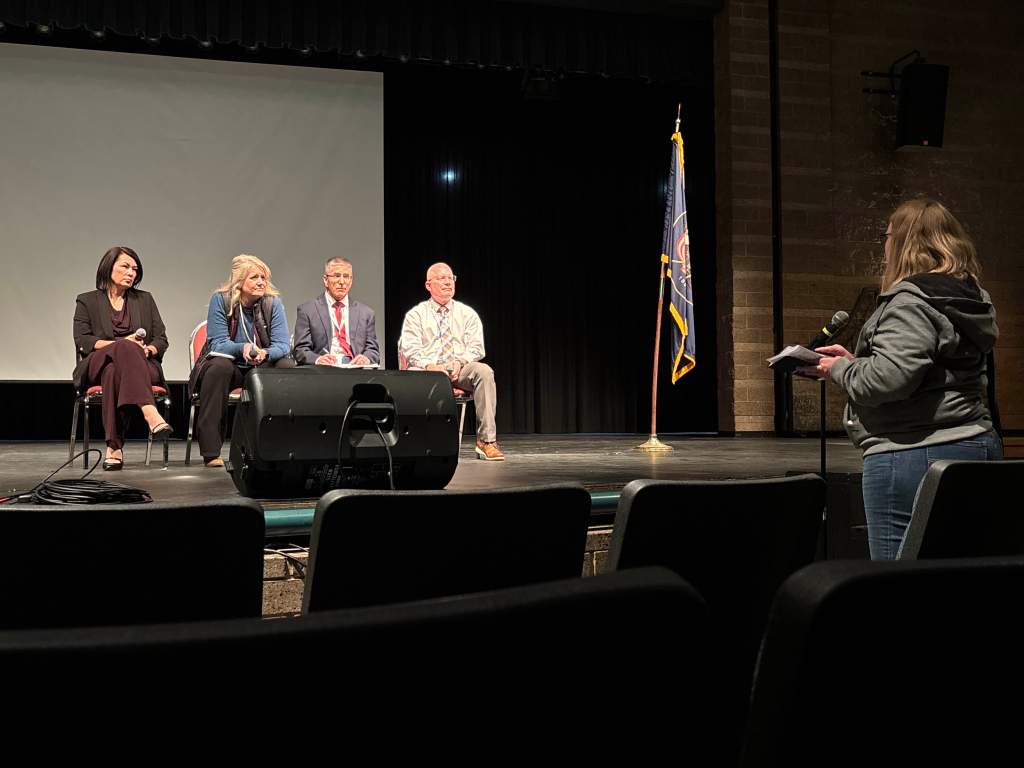
Iron County School District hosted three simultaneous town hall meetings this week—held at Canyon View High School, Cedar High School, and Parowan High School—to gather county-wide input on the proposed four-day school week. While the Canyon View meeting drew a highly engaged audience with strong concerns, district survey data collected earlier this fall showed significant support for exploring the model further. Together, these conversations reveal a complex landscape of needs across the county.
The question underlying much of the discussion was clear: How would a four-day schedule reshape the daily lives, routines, and well-being of families across Iron County?
Why the Proposal Emerged
District administrators explained that the conversation began after the Utah Tax Commission declined to certify the district’s approved tax rate—compounding strain from bond proposals that failed in 2023 and 2024. The board asked district leadership to explore ways to reduce short-term costs.
One possibility: withholding next year’s cost-of-living raise for employees, which could save approximately $1.4 million for a single year. Long-term savings from a four-day week, however, remain unclear.
As the district researched the model, they noted potential benefits reported in other districts:
- More family time and schedule flexibility
- Improved teacher morale, recruitment, and retention
- Alignment with SUU and Southwest Tech schedules
- Fewer absences due to Friday athletic travel
- Reduced burnout for students and staff
Fridays are already the lowest-attended day districtwide, with about 180 fewer elementary students in class than on Wednesdays.
Survey Findings
A preliminary survey showed:
- 67% of parents in support of exploring the model
- 71% of staff in support
These results led the board to host town halls and to launch a more rigorous parent survey before voting in January.
What the Proposed Calendar Changes
The draft calendar:
- Converts most Monday holidays (such as MLK Day and Presidents Day) into school days
- Eliminates nearly all half-day Fridays
- Has teachers work selected Fridays for collaboration
- Extends the school day by 20 minutes in elementary and high school, and 35 minutes in middle school
Instructional hours would remain similar for elementary and high school students, and increase substantially for middle schoolers.
Family Context: Who Is Most Affected?
Iron County’s demographics help explain community concerns:
- 44% of Enoch Elementary students qualify for free or reduced lunch
- The county’s child poverty rate is 13.8%
- Cedar City’s poverty rate is 17.3%
For many families, school provides not only education but also meals, supervision, structure, and safety. A four-day week would not affect everyone equally—some families may experience greater flexibility, while others face heightened strain.
Community Notes: What Families Shared at the Canyon View Town Hall
While the district’s survey showed broad interest in exploring the idea, attendees at this particular meeting were overwhelmingly concerned. Public forums commonly attract those with strong objections, while supporters tend to participate through surveys, but the concerns shared still offer important insight.
Equity and Childcare
Multiple parents voiced that a four-day week would disproportionately affect families without flexible work schedules or access to childcare. Dina Normani spoke first:
“Those advantages only apply to families with work flexibility. That is not a reality for many households in our district.”
She later added:
“It’s going to be at the cost of marginalized groups that just can’t financially support this schedule.”
Academic Pressure and Catch-Up Challenges
Parents worried that longer school days would intensify catch-up pressure for students who miss class. Glenn Fox described his daughter’s struggle:
“If each day’s workload increases by 20%, how much harder will it be for students to catch up when they’re sick?”
Safety, Supervision, and Technology
Concerns also centered on children being left home alone, especially younger students whose parents cannot take Fridays off. A community member with experience in addiction counseling warned:
“Children shouldn’t be left home alone with unlimited technology. We see real consequences from that.”
Alternative Suggestion: Four-Day Week for High School Only
Several parents proposed a split model: a four-day week for high schools while elementary schools remain on a traditional five-day schedule. Many argued that high school students, who juggle difficult coursework, athletics, and jobs, could benefit from a longer weekend and are more capable of staying home independently. Younger children, they noted, require daily structure, hands-on supervision, and accessible childcare—resources that are often limited or unaffordable.
This was not part of the district’s proposal but emerged repeatedly as families considered how developmental needs differ across age groups.
Impact on Hourly Staff
Classified staff members expressed concern that a shortened week would cut their hours and reduce their income. Dee Rose, who works at Fiddler’s Elementary, said:
“This proposal takes money straight out of the pockets of lunchroom workers, aides, and bus drivers.”
She added:
“What our kids lose is stability, routine, and time.”
Teacher Perspectives: Split Sentiment
Teachers themselves are not unified on the issue.
Many welcome the idea:
- more time to plan
- mental-health recovery
- fewer Friday absences disrupting instruction
Her summary captured the nuance:
“I would love it, but that doesn’t mean everyone would. Some families would be thrilled. Some are panicking.”
A Board Member’s Clarification: “This Is Not About the Money Anymore.”
Toward the end of the meeting, a board member clarified that financial concerns are no longer the driving force behind the district’s exploration of the model. Instead, she emphasized the weight of community input:
“Initially, financial concerns prompted the exploration. But that is not what’s driving this anymore.”
She reiterated that the preliminary survey showed strong interest and urged everyone to complete the new, more reliable survey to help determine whether that support holds.
The New Survey Is Live
Parents should check their email for an individualized survey link. To receive it, families must ensure their PowerSchool contact information is up to date. Survey results will heavily influence the board’s January decision.
Final Thoughts: A Family-Science Lens
From a family-science perspective, a four-day week is not a simple calendar change—it is a shift in the systems that structure children’s lives and family routines. Any such change affects:
- childcare access
- household economics
- meal security
- academic consistency
- mental health
- safety and supervision
- teacher well-being
Some families may experience meaningful relief and improved balance. Others may face new stresses, greater financial burden, or disruptive gaps in care.
Iron County’s challenge is not deciding whether a four-day week is inherently good or bad—it is determining whether the structure matches the diverse needs of its families.
The district is now asking for your voice. Parents have until the new survey closes to help shape what the future of school looks like in Iron County.
 The Enoch Observer
Leave a comment